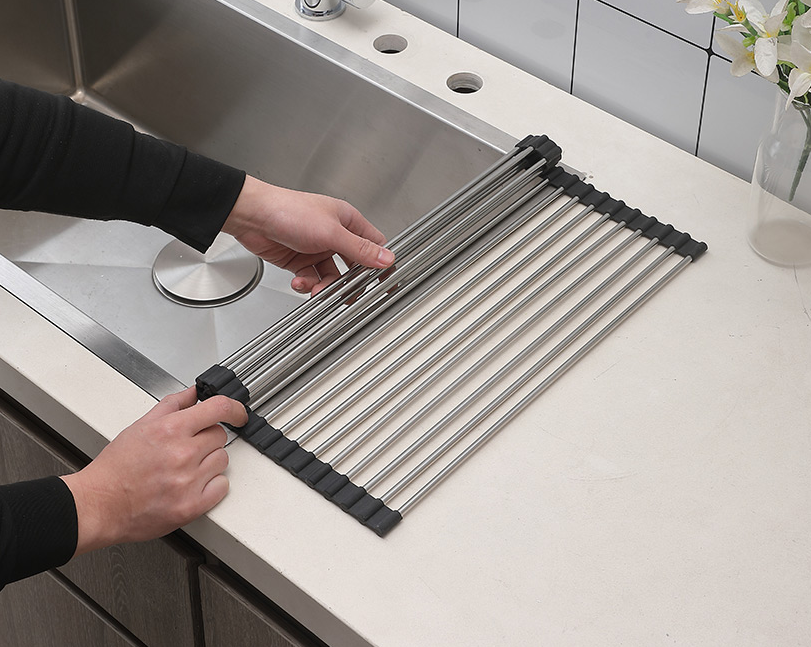
For high-volume kitchenware importers and global e-commerce distributors, the ultimate profitability of an import contract is frequently decided long before the goods reach a retail shelf. In international logistics, the physical footprint of an item during transit heavily dictates its total landed cost. Standard, rigid metal kitchen organizers are notorious for being "phantom weight" cargo. They are physically light but structurally expansive, forcing procurement managers to pay exorbitant freight rates to transport empty space inside ocean containers.
When managing large-scale procurement budgets, continuing to import pre-assembled, bulky kitchen hardware creates an ongoing financial drain on warehouse utilization and logistics efficiency. To protect margins against fluctuating seafright tariffs and rising third-party logistics (3PL) storage fees, wholesale buyers must source hardware that optimizes volumetric density. Transitioning your bulk orders to smart, space-reducing structural variants alters the freight-to-revenue ratio, directly enhancing supply chain efficiency.
The main operational bottleneck for distributors dealing in bulk kitchen organizers is the calculation of dimensional weight. Ocean carriers and continental trucking networks charge based on whichever is greater: the actual physical mass or the space the cargo occupies. Standard wire structures lock a vast amount of empty atmospheric space into their fixed frame, meaning a distributor's shipping invoice is primarily charging them for moving trapped air across the ocean.
Beyond the vessel transit, this inefficient spatial profiling severely penalizes warehousing metrics. In a high-density fulfillment center, every cubic meter of pallet racking carries a monthly overhead cost. If a bulk shipment of kitchen inventory cannot be tightly stacked, it inflates your footprint requirements, driving up overhead before a single order is picked. For businesses fulfilling via overseas e-commerce warehouses, these oversized dimensions also trigger severe penalty surcharges on last-mile parcel shipping, converting a high-margin product into a break-even liability. Shifting toward a flexible collapsible drying dish rack configuration completely rewrites these shipping economics by consolidating the physical volume of the product during its entire warehouse and transit lifespan.
Maximizing the packing density of a standard 40-foot High Cube (HQ) container requires a manufacturing layout designed to minimize product clearance gaps. By eliminating rigid vertical pillars in favor of articulating or modular structural joints, a factory can reduce the individual packaging thickness of a storage unit by up to 80%. This architectural change allows pieces to lie completely flat, enabling tight, interleaved brick-stacking patterns inside the master cartons.
Our manufacturing workshop approaches this volumetric challenge by adapting heavy-duty metal components into flexible, low-profile geometric designs. For wholesale distributors aiming to maximize their container intake and eliminate freight waste, exploring our specialized space-saving hardware like our
A common concern among industrial purchasing agents is whether a collapsible design compromised the structural load-bearing capacity once the product is deployed on a retail counter. Lower-tier manufacturers often use loose rivets or thin plastic hinges that wear out or snap during the initial unfold sequence, leading to high damage claim rates from retail consumers.
Our engineering floor eliminates this compromise by implementing heavy-duty mechanical locking systems and reinforced pivot points across all our space-saving lines. The hardware remains completely rigid when locked into its active operational form, supporting heavy kitchen pots without lateral swaying. For bulk buyers, this means you capture all the freight savings of a flat-packed collapsible drying dish rack during the shipping phase, while still delivering an unyielding, industrial-strength storage piece to your commercial clients upon delivery, protecting your business from the logistical nightmare of product returns.
Optimizing a kitchenware distribution network requires a strict focus on maximizing transport density. Continuing to import bulky, rigid wire frames forces your business to absorb massive, unnecessary shipping and warehousing expenses. Standardizing your bulk purchasing on flat-packing, rollable, or collapsible metal systems eliminates freight waste, shrinks your 3PL warehouse footprint, and provides a significant competitive advantage in landed-cost pricing.
If your current kitchen hardware shipments are eating up too much container volume, or if you are preparing a high-volume supply tender for an upcoming retail season, our product development team can optimize your packaging dimensions. Send over your target container constraints, current master carton dimensions, and required order volumes today. Our engineering desk will calculate the exact volumetric savings and compile a direct factory logistics proposal designed to maximize your container utilization and protect your profit margins. Get in touch with our supply chain desk now to initiate a custom packaging study for your inventory.