Choosing the right sink grid size is essential for protecting your sink surface, improving drainage, and ensuring daily convenience in the kitchen. The correct size should match both the interior dimensions of your sink and the location of the drain opening. Selecting an improper size may lead to wobbling, reduced stability, or blocked water flow. The process requires measuring the sink accurately, understanding bowl shape, evaluating corner radius, and ensuring compatibility with accessories such as garbage disposals.
sink grids are designed to sit at the bottom of the sink, preventing pans, utensils, and sharp objects from scratching or denting the surface. Because every sink model has unique dimensions, a well-fitted grid helps maintain smooth drainage and supports heavy cookware. ZHENGYONG provides customizable sink grids that match different stainless steel sinks, farmhouse sinks, single bowls, and double bowls. You can explore custom-fit options here: ZHENGYONG Kitchen Sink Bottom Grid.
Their customized sizing ensures each grid aligns perfectly with the user’s sink structure, enhancing both protection and daily function.
A proper sink grid selection process involves careful measurement, awareness of sink design, and attention to material quality. The following guide covers all the essential steps.
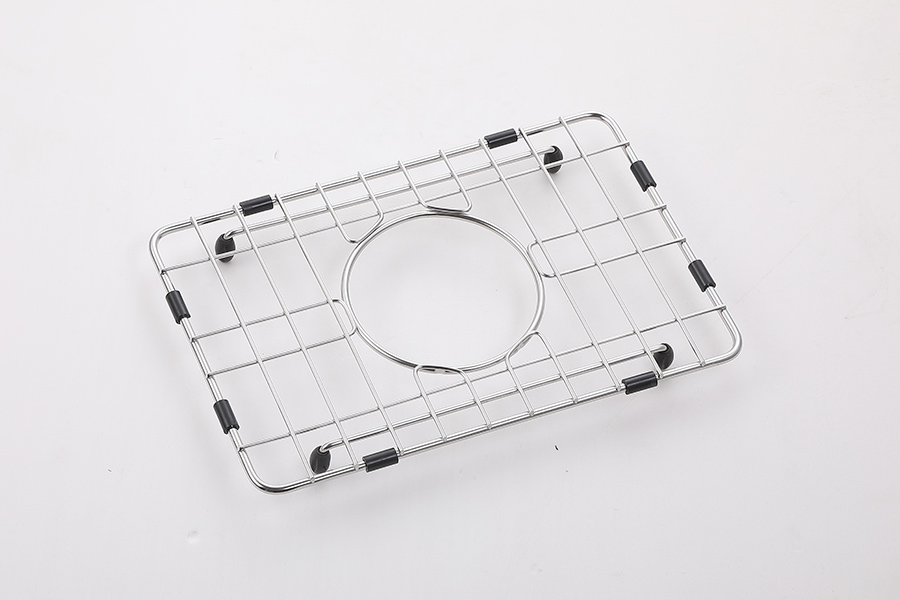
Accurate measurements are the foundation of choosing the right sink grid size. Because sink shapes and depths vary widely, especially between zero-radius, small-radius, and rounded designs, homeowners must measure the inside base rather than the top edge.
When measuring your sink, make sure to identify:
Interior length: measured at the bottom where the grid will sit
Interior width: measured across the base, not the rim or top
Drain opening position: centered, offset rear, left, or right
Corner radius size: straight-edge sinks require sharper grid corners
Bowl depth: ensures the grid height does not interfere with drainage
These measurements ensure that the grid sits flat without rocking. Even a few millimeters of difference can affect stability. Many homeowners rely only on external sink size, but the interior size is often slightly smaller due to sink walls and corner curves.
ZHENGYONG customized grids are made according to interior base dimensions, avoiding issues such as sliding, misalignment, or edge lifting. Their grids also include adjustable protective feet to optimize leveling at the bottom of the sink.
Even when the dimensions are correct, choosing a grid also requires matching the sink’s shape and the drain layout. Different sink models vary significantly in bowl design, so grid compatibility depends on more than size alone.
Single bowl sinks
Large uninterrupted space requiring a rectangular or square grid.
Double bowl sinks
Each bowl needs its own grid sized separately.
Farmhouse and apron-front sinks
Typically deeper with wide internal bases.
Zero-radius sinks
Sharp edges requiring precise 90° grid corners.
Rounded corner sinks
Use grids with matching rounded edges for a flush fit.
The drain alignment is equally important. A grid’s center hole must match the drain placement so water flows smoothly and debris does not collect. Most modern sinks feature one of the following drain positions:
| Drain Position | Suitability | Key Note |
|---|---|---|
| Center drain | Standard sinks | Works with universal grid shapes |
| Rear offset drain | Modern stainless steel sinks | Improves workspace and drainage |
| Left/right drain | Double-bowl sinks | Requires left/right-specific grid designs |
ZHENGYONG offers grid customization for both center-drain and offset-drain sinks, ensuring perfect alignment for efficient drainage. Their designs also include open drainage zones to avoid food buildup under the grid.
Height is an often-ignored detail when choosing a sink grid. The grid should raise cookware above the sink bottom without making washing uncomfortable. Feet that are too tall raise items excessively; feet that are too short do not provide enough protection.
A proper grid height typically ranges from 10 mm to 25 mm, depending on the sink design. Taller feet improve drainage but require deeper sinks. If your sink includes sound-deadening pads or sloped bottom channels, selecting the correct foot height ensures the grid sits level.
Additional fitment considerations include:
Whether the sink bottom has slope lines for drainage
The presence of garbage disposal outlets
Whether you frequently place heavy pots in the sink
Whether you want a grid that covers the entire base or only the working zone
For sinks with steep slopes, customized protective foot spacing is crucial to prevent rocking. ZHENGYONG grids offer non-slip rubber feet to reduce noise and keep the grid stable on different sink surfaces.
Sink protection should also influence your decision. If you frequently wash cast iron cookware, stainless steel baking trays, or heavy pots, a thicker grid wire helps prevent denting or long-term surface wear.
The durability and lifespan of a sink grid depend heavily on the material. High-quality grids use welded stainless steel with corrosion resistance. Poor-quality materials may discolor, rust, or lose shape after long-term exposure to detergents and minerals.
| Feature | Basic Grids | High-Quality Grids |
|---|---|---|
| Stainless steel grade | Generic steel / 201 | 304 stainless steel |
| Wire thickness | 3–4 mm | 5–6 mm reinforced |
| Weld stability | Weak spot welds | Heavy-duty welding |
| Coating | Plastic coatings that peel | Bare stainless steel or optional silicone bumpers |
| Heat resistance | Low | High |
304 stainless steel is the industry standard because it resists corrosion and maintains clean appearance over time. This is essential for kitchen environments with food acids, hot water, and detergents.
ZHENGYONG sink grids use 304 stainless steel wire and anti-scratch rubber bumpers. These upgrades increase lifespan and ensure the grid remains stable even under heavy cookware. Additionally, welded construction prevents wire separation, which is a common issue in cheaper models.
Different households have different needs. Some sinks match standard grid sizes, while others—especially handmade sinks or apron-front models—require full customization. Understanding the types of grids helps determine which option is most suitable.
Fit common sink sizes
Affordable and widely available
Limited to fixed shapes
Suitable for homeowners with mainstream sink models.
Designed for specific sink series from major brands
Offer better alignment than universal sizes
May still require slight adjustments
Useful for sinks from well-known manufacturers but not fully custom shapes.
Tailored to exact interior dimensions
Compatible with unusual corner radii
Match precise drain location
Provide best stability and aesthetics
This is the specialty of ZHENGYONG, which offers fully customized bottom grids that align perfectly with handcrafted sinks, modern zero-radius designs, or unique basin layouts. Custom designs ensure no wasted space and maximize protection.
The table below compares the three types:
| Grid Type | Fit Accuracy | Ideal For | Cost Level |
|---|---|---|---|
| Standard | Medium | Common sinks | Low |
| Semi-Custom | High | Branded sinks | Medium |
| Fully Custom | Perfect | Handmade or irregular sinks | High |
When accuracy matters most—especially for premium stainless steel or quartz sinks—fully custom grids are the best investment.
Choosing the right sink grid size involves accurate measurement, understanding drain placement, evaluating bowl shape, and ensuring material durability. A well-matched sink grid provides essential protection, prevents scratching, improves drainage, and extends the lifespan of the sink. Homeowners should consider interior dimensions, corner radius, foot height, and material quality when selecting the best option.
Fully customized sink grids—such as those offered by ZHENGYONG—provide the most reliable fit and performance. Their high-quality stainless steel construction, tailor-made sizing, and reinforced welding ensure long-term durability and a clean, stable fit. A correctly chosen sink grid enhances both function and protection, transforming everyday kitchen tasks into a more efficient and cleaner experience.