Durable stainless steel sink grids are created through a combination of high-grade materials, precise engineering, reinforced welding, and surface treatments designed to withstand years of daily exposure to water, detergents, cookware weight, and food acids. A premium grid is not simply a wire rack placed at the bottom of the sink—it is a carefully constructed component engineered for stability, corrosion resistance, and structural longevity. The durability comes from the strength of the stainless steel chosen, the accuracy of each wire bend, the consistency of welded joints, and the reliability of protective foot pads that maintain the sink’s surface condition.
Every stage of production matters. From selecting the correct stainless steel grade to forming the supporting frame, each step must be carried out with precision. Manufacturers such as ZHENGYONG emphasize reinforced structure, heavy-duty welding, 304 stainless steel wire, and customizable sizing to ensure the grid fits securely and performs exceptionally. You can explore these durable, customized grid solutions at: ZHENGYONG Stainless Steel Sink Bottom Grid.
Understanding how these grids are made helps customers appreciate why high-quality options last longer and perform better in kitchen environments.
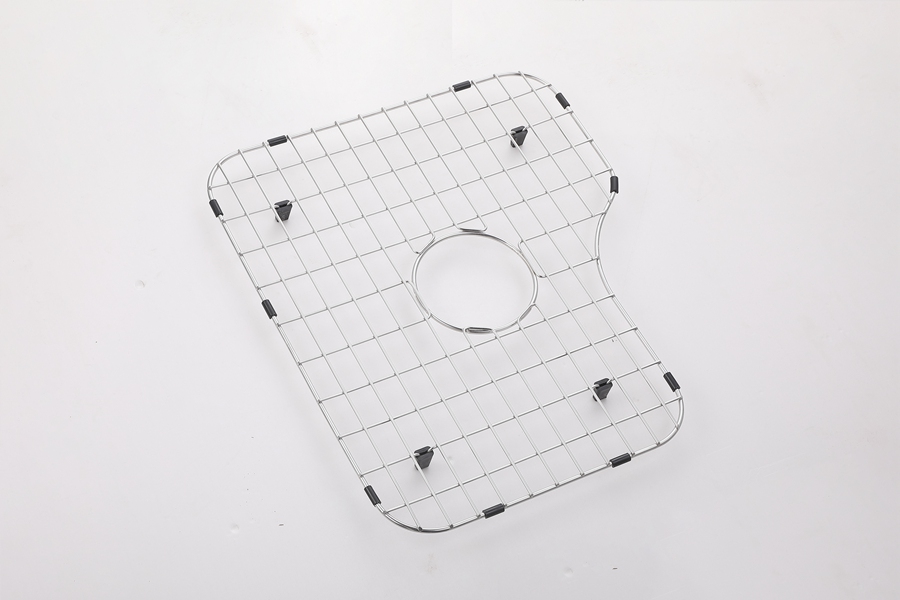
Durability begins with material selection. Stainless steel sink grids require metal that can resist corrosion, maintain structural strength, and withstand frequent contact with cookware and water. Manufacturers typically rely on 304 stainless steel for premium grids due to its balance of hardness, rust resistance, and food-safe properties.
Key characteristics of 304 stainless steel include:
High chromium and nickel content for superior corrosion resistance
Excellent strength-to-weight ratio
Ability to maintain shape even under heavy pots
Resistance to discoloration from detergents and acidic foods
Using lower-grade steel can result in rust spots, bending, or discoloration over time. Premium grid manufacturers invest in thicker wire diameters—usually 5–6 mm for the main frame and 3–4 mm for cross wire support—to achieve the desired rigidity.
ZHENGYONG uses 304 stainless steel exclusively for its sink grids, as this material withstands long-term use and remains visually clean and structurally strong. The quality of the metal sets the foundation for the grid’s durability.
After selecting the stainless steel wire, the next step involves shaping the material into the grid’s structure. This process requires machinery capable of bending the wires accurately to match the sink’s interior base and corner radius. Precision is essential because even a small misalignment can cause rocking or poor drainage.
The wire forming process includes:
Cutting the wire to precise lengths
Bending the frame edges to match zero-radius or rounded-radius sinks
Forming the cross-support wires at consistent intervals
Maintaining exact spacing to ensure even weight distribution
Ensuring wire ends match alignment patterns before welding
These steps help create a rigid frame that does not shift or twist under load.
For premium grids, the outer frame must be strong enough to prevent bending yet flexible enough for minor adjustments during installation. ZHENGYONG applies strict dimensional controls because the accuracy of bends determines the grid’s ability to sit flush inside different types of sinks.
Correct forming prevents wobbling and ensures that the grid supports cookware comfortably without altering sink stability.
Durability is determined not only by material quality but also by the strength of welded joints. The welding process connects the frame wire to the support wires, distributing load evenly across the grid. Each weld must be consistent, clean, and fully fused to prevent separation under weight.
The welding process involves:
Positioning cross wires on the frame
Applying controlled heat to fuse the joints
Reinforcing high-stress zones, especially around the center area
Inspecting welds for smoothness, strength, and uniformity
Higher-quality grids use spot welding techniques that ensure deep penetration and a seamless connection. Poor welds can crack or break over time, especially under the sudden impact of heavy pots.
Premium manufacturers also polish weld points to remove sharp edges, creating a smooth finish that prevents scratching delicate cookware. ZHENGYONG reinforces the structural welds on all grid joints, enhancing the grid’s ability to support weight and maintain its form over many years.
Proper welding is one of the key differentiators between a long-lasting grid and one that fails prematurely.
Even with high-grade stainless steel, surface finishing is crucial for long-term performance. A polished surface prevents residue buildup, reduces friction between cookware and grid wires, and enhances the corrosion-resistant properties of the metal.
Premium sink grid finishing typically includes:
Mechanical polishing to smooth edges and surfaces
Deburring to remove rough spots or metal particles
Surface passivation to enhance corrosion resistance
Anti-scratch coating on rubber feet to protect the sink finish
Passivation, in particular, improves durability by strengthening the chromium oxide layer on stainless steel, making it more resistant to chemicals and water exposure.
Wire surfaces must be free of imperfections to ensure food particles do not collect on the grid. Polished finishes also make cleaning easier and improve the grid’s appearance.
ZHENGYONG employs advanced finishing processes to ensure that its stainless steel grids remain clean, shiny, and corrosion-resistant even under continuous kitchen use.
A durable sink grid must fit the sink perfectly. Poor fit results in wobbling, uneven support, and increased wear on both the grid and the sink surface. Engineers consider several aspects when designing a custom-fit grid:
Matching interior dimensions of the sink
Adjusting wire layout based on drain position
Creating exact corner radius curves
Ensuring the grid sits level on sloped sink bottoms
Protective foot pads are a critical durability feature because they minimize friction on the sink surface and provide anti-slip performance.
Premium foot pads should offer:
Heat resistance
Anti-scratch protection
Non-slip stability
Replaceability if worn
Quality checks ensure each grid meets durability standards:
| Inspection Area | Importance | Quality Requirement |
|---|---|---|
| Weld strength | Prevents breakage | Must withstand heavy load |
| Wire alignment | Affects fit | Perfect spacing and straightness |
| Foot pad adherence | Protects sink | Firmly attached with no gaps |
| Surface finishing | Prevents stains | Smooth, polished surface |
ZHENGYONG uses strict quality control processes to guarantee that each grid fits securely and performs consistently, reducing the risk of long-term wear.
Stainless steel sink grids are made for durability through a detailed manufacturing process involving high-grade 304 stainless steel, precision wire forming, reinforced welding, advanced surface finishing, and customized fit engineering. These components work together to create a grid that withstands heavy cookware, frequent washing cycles, and continuous exposure to water and detergents.
Premium manufacturers such as ZHENGYONG incorporate meticulous engineering and strict quality control to ensure each grid offers long-term performance, anti-corrosion strength, and a perfect fit for various sink designs.