Homeowners often wonder whether kitchen sink grids can be cleaned in a dishwasher, especially when the grids accumulate soap residue, food particles, or hard-water stains. This question becomes even more important for people who use stainless steel undermount or farmhouse sinks, where a bottom grid is essential for protecting the sink surface. In this article, we explore whether sink grids can safely go into the dishwasher, why some materials are suitable while others may not be, and what users should pay attention to when cleaning them. As a professional manufacturer of stainless steel accessories, ZHENGYONG offers durable and safe-to-clean options such as our sink bottom grids, engineered for long-term kitchen use and easy maintenance.
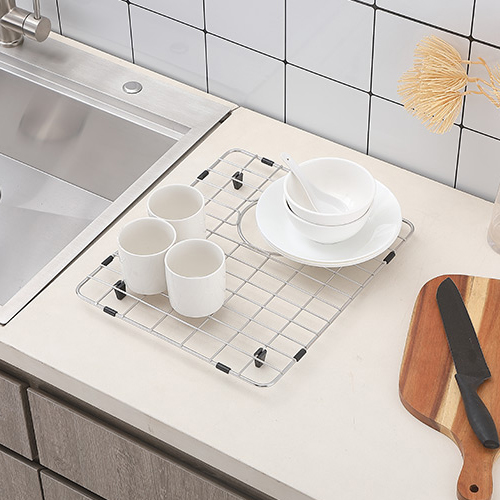
In most cases, yes — stainless steel sink grids can be safely cleaned in the dishwasher. Stainless steel is a stable material with strong resistance to heat, detergents, and water pressure. These characteristics make it suitable for dishwashers, which typically operate at elevated temperatures and rely on alkaline detergents to break down grease. A high-quality stainless steel grid, such as the ones produced by ZHENGYONG, maintains its structural integrity and finish even when exposed to repeated dishwasher cycles.
However, the answer changes depending on the material, surface finish, and construction quality. Stainless steel is dishwasher-safe because it does not oxidize or degrade easily, but grids made with iron coated in chrome, low-grade alloys, or materials with rubber feet that cannot withstand heat may deform, discolor, or peel. Before placing any grid in a dishwasher, it is important to confirm that the material and accessories are compatible with high-temperature water.
A durable stainless steel grid with heat-resistant bumpers and stable weld joints will go through dishwashing cycles without distortion. ZHENGYONG’s sink grids are produced with controlled dimensional tolerance, corrosion-resistant steel, and strong welded structures, ensuring they remain sturdy and hygienic after washing. Therefore, for users who prioritize convenience, a stainless steel grid is the best choice for dishwasher cleaning.
The reason stainless steel works well in dishwashers is due to its natural chromium oxide layer that resists acids, detergents, and heat. This passive layer protects the metal from rust even when exposed to moisture for long periods. Dishwashers rely on both heat and alkaline cleaners, but stainless steel is non-reactive and will not absorb or trap chemicals, making it safe for repeated washing without losing shine or strength.
Another factor is the mechanical stability of stainless steel. Sink grids must handle the weight of dishes daily, which means a structurally strong material is essential. When placed in a dishwasher, a weak grid may bend under water pressure or lose its shape. ZHENGYONG uses high-grade stainless steel with precise welds, enabling the grid to maintain its form even when washed frequently.
Lastly, the plastic bumpers and feet used on stainless steel grids must be resistant to heat. High-quality grids use heat-stable polymer accessories, while cheaper alternatives use lower-grade plastics that soften or crack in dishwashers. Understanding this difference helps explain why some grids fail during dishwashing while others remain stable for years.
Although stainless steel grids are generally safe, some situations require caution. If the grid contains rubber feet not rated for dishwasher heat, washing may cause deformation. Another example is a grid that has been exposed to extremely harsh chemicals or bleach before washing — such chemicals can interact with dishwasher detergents and dull the finish.
The following table summarizes when a sink grid is safe or unsafe to wash in the dishwasher:
| Grid Material / Condition | Dishwasher-Safe? | Reason |
|---|---|---|
| High-grade stainless steel | Yes | Heat and detergent resistant |
| Low-grade alloy metal | Not recommended | May corrode or discolor |
| Chrome-plated iron | No | Coating peels, causing rust |
| Stainless steel with heat-resistant bumpers | Yes | Stable under high temperature |
| Stainless steel with low-grade rubber feet | No | Feet may melt or crack |
| Plastic grid | Conditional | Low-temperature cycles only |
This comparison shows that true stainless steel grids provide the most consistent results and maintenance convenience.
High-quality stainless steel will not discolor. If discoloration occurs, it is usually due to mineral buildup or detergent residue, not actual damage. Mild vinegar cleaning restores the shine.
Dishwasher detergents are safe for stainless steel. Problems only occur when the grid is combined with bleach or acidic cleaners before washing.
If the bumpers are made of heat-resistant material, they stay intact. ZHENGYONG uses stable polymers that remain firm in dishwasher conditions. Low-grade bumpers from cheaper grids, however, can loosen or warp.
Most sink grids are too large for the top rack. The bottom rack is fine as long as the grid does not block spray arms.
Dishwashers remove general grease and food particles, but heavy limescale may require a pre-soak in warm vinegar or a stainless steel cleaner.
A well-sized stainless steel grid will not harm the dishwasher. Just ensure it is securely placed so it does not shift during washing.
Sink grids made of high-quality stainless steel are typically safe to clean in the dishwasher. They resist heat, detergents, and moisture, making them ideal for modern kitchen maintenance. ZHENGYONG’s stainless steel sink bottom grids are manufactured with precise welds, durable steel, and heat-resistant bumpers to ensure they withstand frequent dishwashing without rusting or losing structure.
By choosing a premium stainless steel grid and following simple cleaning precautions, homeowners can keep their kitchen sink accessories hygienic, bright, and long-lasting — with the convenience of dishwasher cleaning whenever needed.