When sourcing sink bottom grids, the stainless steel grade is not a small detail. The grid lives in a high-moisture zone, touches detergents and food residue daily, and is repeatedly exposed to temperature changes from hot cookware and cold rinsing. In these conditions, the difference between 304 and 201 stainless steel shows up in corrosion resistance, long-term appearance, and total cost of ownership.
For project buyers, brand owners, and kitchen sink manufacturers, the best choice depends on where the product will be used and what performance level the customer expects. This guide explains the real differences in a purchasing-friendly way and shows how to specify the right material for your sink grid program.
If you are looking for stable supply and consistent manufacturing for bottom grids, ZHENGYONG kitchen sink bottom grids are built for practical kitchen use, with options that support different sink models and positioning requirements.
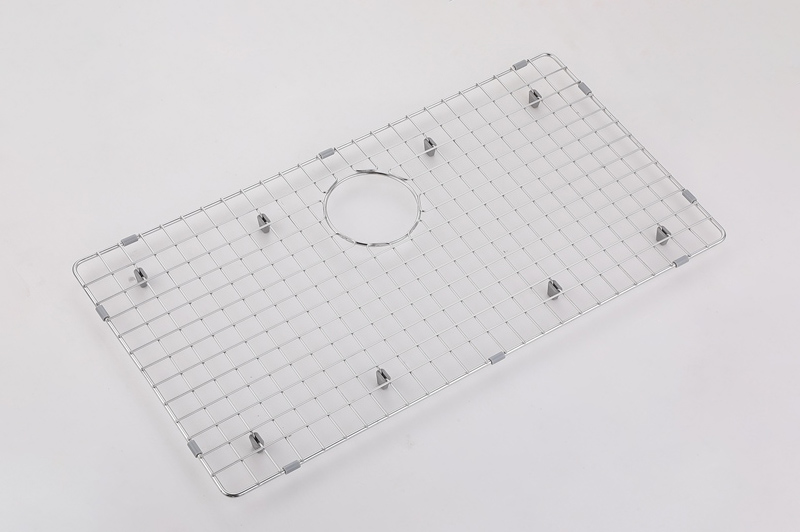
A sink grid is not just a metal rack. It is a working component that must stay stable and clean-looking after long-term exposure to:
Frequent water contact and slow drying at corners and feet
Dish soap, degreasers, and occasional stronger cleaners
Food acids such as citrus, vinegar, tomato, and salt water
Heat shock from placing hot pans into a wet sink
Abrasion from cookware edges, cast iron, and metal utensils
This is why the stainless grade matters. A grid that looks fine in the first 60 days can still fail the customer experience after one year if corrosion resistance is not enough for the environment.
304 stainless steel is widely considered the preferred material for wet-area kitchen hardware because it offers stronger resistance to rust and staining under normal kitchen conditions. For sink grids, the advantage is not only corrosion resistance, but also long-term surface stability.
304 grids are typically favored for:
High-humidity regions
Coastal areas where salt in the air accelerates corrosion
Homes with hard water that leaves mineral residue
Premium sink packages and long-life kitchen programs
Hospitality and light commercial kitchens with frequent washing cycles
If your buyers expect a clean, stable appearance over years, 304 is usually the more reliable choice.
201 stainless steel is often used when the target is cost efficiency and the usage environment is controlled. It can perform well in many standard residential kitchens, especially when users keep the sink dry and avoid harsh chemical cleaners.
201 grids are commonly chosen for:
Budget-focused retail lines
Regions with low humidity and low salt exposure
Projects where grids are treated as replaceable accessories
Shorter product life-cycle programs
However, the key is expectation management. If a customer uses aggressive cleaners or lives in a coastal climate, 201 is more likely to show discoloration or corrosion earlier.
Below is a practical comparison focused on sink bottom grid performance rather than general metallurgy.
| Factor that affects grid performance | 304 stainless steel | 201 stainless steel | What it means for buyers |
|---|---|---|---|
| Corrosion resistance in wet areas | Stronger | Moderate | 304 handles long-term moisture better |
| Salt and coastal climate tolerance | Better | More sensitive | 304 reduces complaint risk in coastal markets |
| Resistance to cleaner residue and harsh detergents | Better | More sensitive | 304 stays stable with wider cleaning habits |
| Long-term appearance stability | More consistent | More likely to discolor over time | 304 protects premium look longer |
| Upfront cost | Higher | Lower | 201 can reduce BOM for price-led programs |
| Best fit for | Premium residential, hospitality, long-life programs | Budget residential, controlled environments | Choose based on use case and warranty positioning |
In most export markets, 304 aligns better with premium kitchen expectations because it supports both durability and appearance.
The better grade depends on how you position your sink package and where it will be installed. A simple way to decide is to match the grade to the risk level of the environment.
Your sinks are sold as mid-to-high-end products
You supply coastal regions or humid climates
You want fewer after-sales issues related to rust spots or staining
Your customers use stronger cleaners or disinfecting routines
You are supplying hospitality, rental upgrades, or multi-family projects where user behavior is not predictable
In these scenarios, 304 is usually the better long-term value even if the initial cost is higher, because it reduces replacement and complaint risk.
The product line is entry-level and price sensitivity is high
The installation environment is dry and non-coastal
The grid is positioned as an accessory with a shorter replacement cycle
Buyers clearly understand the care requirements and avoid harsh chemicals
201 can be a workable solution when the environment and expectations are aligned with its performance level.
Even if the grade is correct, a sink grid can still perform poorly if manufacturing details are inconsistent. For bulk sourcing, these factors strongly influence stability, appearance, and customer complaints:
Wire structure and rigidity
A stronger layout helps prevent wobble and deformation under heavy cookware.
Welding consistency
Weak or uneven welds can create sharp points, instability, or early failure.
Surface finishing
A consistent finish is easier to clean and maintains a more uniform look.
Fit accuracy
A grid must match sink dimensions and corner radius. Poor fit creates movement, noise, and abrasion.
Feet and contact points
Proper support feet keep cookware elevated and reduce sink-bottom scratching.
This is where choosing a supplier with stable production matters as much as choosing 304 or 201.
For many overseas buyers, the real challenge is not deciding 304 vs 201. The challenge is making sure every shipment matches the same fit and quality standard, especially when the grid is part of a sink set or a long-term program.
ZHENGYONG kitchen sink bottom grids are developed for practical kitchen performance and scalable supply. If you are sourcing for distribution, OEM programs, or sink bundle projects, ZHENGYONG can support a specification-driven approach so the grid matches your sink model and quality positioning.
Common sourcing objectives ZHENGYONG supports include:
Matching grid size to sink bowl dimensions and corner radius
Building stable programs for repeated orders and consistent batch quality
Supporting different market positioning from cost-efficient lines to premium sets
Helping reduce after-sales issues by aligning material grade and usage environment
If you are selling into humid or coastal markets, or positioning your sink set as premium, 304 is usually better.
If your program is strongly cost-driven and targets controlled residential environments, 201 can be acceptable with proper care guidance.
Regardless of grade, prioritize fit accuracy, stable structure, and consistent finishing, because these are the most common reasons buyers see complaints.
304 and 201 stainless steel sink grids are not interchangeable. For sink bottom grids, the better choice is the grade that matches real-world exposure and customer expectations. 304 is typically the safer long-term option for durability, corrosion resistance, and appearance stability, especially in export markets and premium sink packages. 201 can be a practical cost-saving option for controlled environments and price-led programs.
If you are building a sink accessory line or bundling grids with stainless sinks, explore ZHENGYONG kitchen sink bottom grids to source grids that match your sink models and quality positioning with consistent supply support.