A kitchen drain basket is one of those small items that quietly decides whether your countertop stays dry, your dishes dry faster, and your cleanup routine feels organized or chaotic. The right choice depends on how you wash, how much space you have, and what you expect the basket to handle every day, from quick rinsing of produce to drying cookware after a family meal.
If you are sourcing for retail, hospitality, or project supply, consistency and usability matter even more than style. That is why many buyers look for stable construction, easy-clean surfaces, and repeatable production quality. This guide walks through what a kitchen drain basket is, what to check before you buy, and how to match the basket to real kitchen workflows. You can also explore ZHENGYONG’s drainage and drying solutions here: ZHENGYONG dish drying rack and draining solutions.
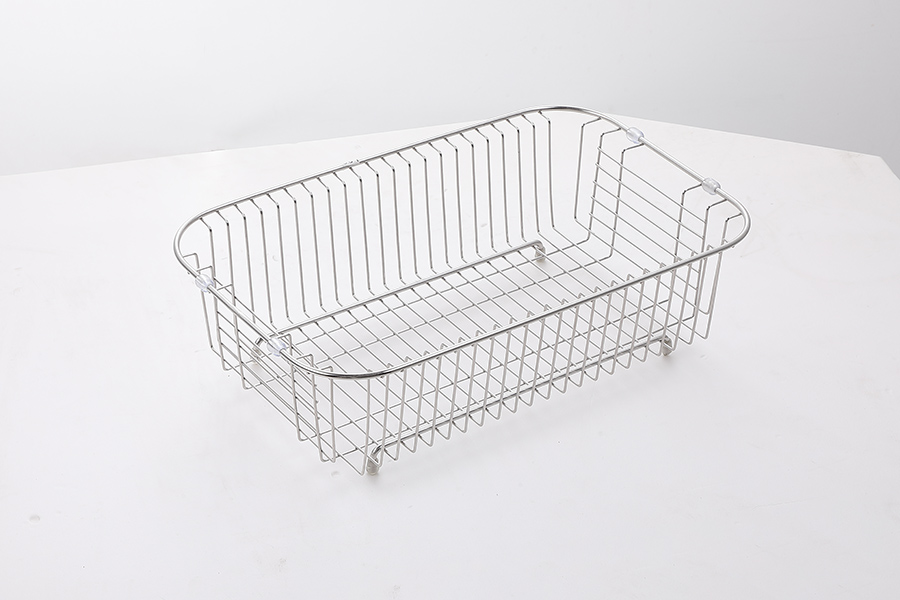
A kitchen drain basket is a drainage-focused organizer used to let water drip away from washed items. Depending on the design, it can function as a dish drainer, a produce draining basket, a sink-side strainer basket for rinsed tools, or a compact drying station for cups and utensils.
A good drain basket should solve four problems at the same time.
It should keep water from pooling under items, it should guide runoff into the sink instead of onto the counter, it should hold items steadily without tipping, and it should be easy to clean so it does not become a hygiene problem.
Most wrong purchases happen because buyers choose based on appearance and forget the main workload. A drain basket that is perfect for rinsing vegetables might be frustrating for heavy plates, and a rack built for dishes might be oversized for a small apartment sink.
Use these questions to define your primary use.
Are you mainly draining dishes after washing by hand
Are you mainly draining produce and fruit
Do you need a basket that can handle cookware weight
Do you want a countertop unit or a sink-side or in-sink solution
Do you need it for home kitchens, rental properties, or hospitality back-of-house use
Once the use case is clear, selection becomes much easier.
Drain baskets fail when water goes everywhere. Look for a design that naturally directs water down and away from items, ideally toward the sink. If the basket sits on a counter, the base should not trap water. If it sits near a sink edge, the drainage path should be predictable and not rely on perfect placement.
For buyers, drainage performance is also linked to customer reviews. If a product causes countertop puddles, it quickly becomes a return risk.
Capacity is not only about how many plates fit. It is also about how items stack and whether airflow can reach them. A compact basket that forces items to touch will dry slower and can leave water marks.
Footprint matters just as much. Measure the available space and consider daily movement around the sink. A basket that blocks faucet access or occupies prep space will not be used consistently, even if it looks premium.
A drain basket should remain stable when plates are inserted on one side. Uneven loading happens constantly in real use. If the structure flexes, shifts, or tips, users stop trusting it and start placing items in the sink instead.
For sourcing, stability usually comes from balanced structure, a solid base, and a sensible weight distribution rather than extreme lightness.
Material selection affects corrosion resistance, cleaning effort, and long-term appearance. In many markets, buyers prefer materials that resist rust and do not stain easily from hard water, coffee, or food residue. Surface finish matters because rough finishing catches grime and becomes difficult to maintain.
When choosing, focus on whether the surface is easy to wipe clean, whether joints are smooth, and whether the design avoids hard-to-reach corners.
Drain baskets are exposed to soap residue, food particles, and water minerals. If the design has too many tight gaps, it becomes a cleaning burden. Buyers should prioritize structures that rinse clean quickly and do not require special brushes.
A practical test is to imagine cleaning it in 30 seconds. If it seems difficult, daily users will neglect it.
Use this table to match basket types to common customer needs.
| Basket type | Best for | Main advantage | Watch out for |
|---|---|---|---|
| Compact drain basket | Small kitchens, produce rinsing | Saves space, easy to move | Can be too small for plates and pans |
| Dish Drying Rack style | Plates, bowls, daily dish loads | Better airflow, more capacity | Requires stable drainage control |
| Sink-side draining solution | Countertop water control | Keeps water close to sink | Fit depends on sink layout |
| High-capacity rack | Families and heavy cooking | Handles volume and cookware | Needs stronger structure and easier cleaning |
If you are selecting for wholesale programs, it is often smarter to offer two sizes, a compact option and a higher-capacity option, rather than forcing one basket to serve every kitchen.
Drain baskets are handled with wet hands. That means comfort and grip matter.
A better basket is easier to lift when wet, does not have sharp edges, and allows quick placement of items without forcing users to angle plates awkwardly. If the basket includes utensil storage, it should separate sharp items from cups and avoid blocking airflow.
This is also where consistent manufacturing matters. If edges vary between batches or the basket feels different from one production run to another, project customers will notice.
If you are buying for a brand, distributor, or large interior program, selection is not only about one sample. It is about repeatability.
Use this checklist during evaluation:
Stable base with no rocking
Even finishing and consistent surface feel
Smooth joints with no snag points
Structure holds weight without deformation
Drainage path is predictable and does not create puddles
Easy cleaning access, especially in corners and joints
Packaging and labeling options if you need private label
ZHENGYONG supports buyers who need stable production and practical drainage-focused designs for long-term programs. You can view relevant products and options here: ZHENGYONG dish drying rack and draining solutions.
Home users usually want fast drying, clean appearance, and minimal countertop mess. Prioritize easy cleaning, stable placement, and drainage control.
Space and durability are the top priorities. Compact footprint, stable base, and low-maintenance cleaning features matter more than extra capacity.
The basket is used more frequently and by different people. Structure strength, consistent drainage, and quick cleaning become the key. Products that reduce mess and shorten drying time can improve workflow.
Appearance still matters, but the top driver of returns is performance. If the drainage system is weak, customers complain even if the product looks premium.
ZHENGYONG focuses on practical kitchen organization and drainage solutions that are designed for daily use and sourcing stability. For buyers, this typically means product options that match different kitchen sizes, consistent manufacturing control, and support for OEM and wholesale requirements depending on program needs.
If you are building a product range or sourcing for projects, it is useful to work with a supplier that can maintain consistent specifications, offer packaging support when required, and provide product variations that align with real market demand.
You can review ZHENGYONG’s product range here: ZHENGYONG dish drying rack and draining solutions.
Selecting the right kitchen drain basket is mainly about matching the basket to daily workload, controlling water effectively, and choosing a structure that stays stable under uneven loading. Material, finish, and cleaning effort decide whether users will keep it in use long-term or abandon it after a few weeks.
For buyers who want drainage-focused designs that fit real kitchen routines and support consistent sourcing, explore ZHENGYONG dish drying rack and draining solutions to compare options and build a practical product lineup.