A sink bottom grid is a fitted rack that sits on the base of a kitchen sink to protect the sink surface, improve drainage, and make daily washing tasks more organized. It looks simple, but it solves several practical problems that affect both appearance and long-term use. Without a grid, cookware and utensils rest directly on the sink bottom, where repeated contact can create scratches, dull patches, and noise. Water can also pool under flat items, leaving mineral spots or residue rings that are harder to clean.
This article explains what a sink bottom grid is for, how it works, how to choose the right one, and how to maintain it for the best performance.
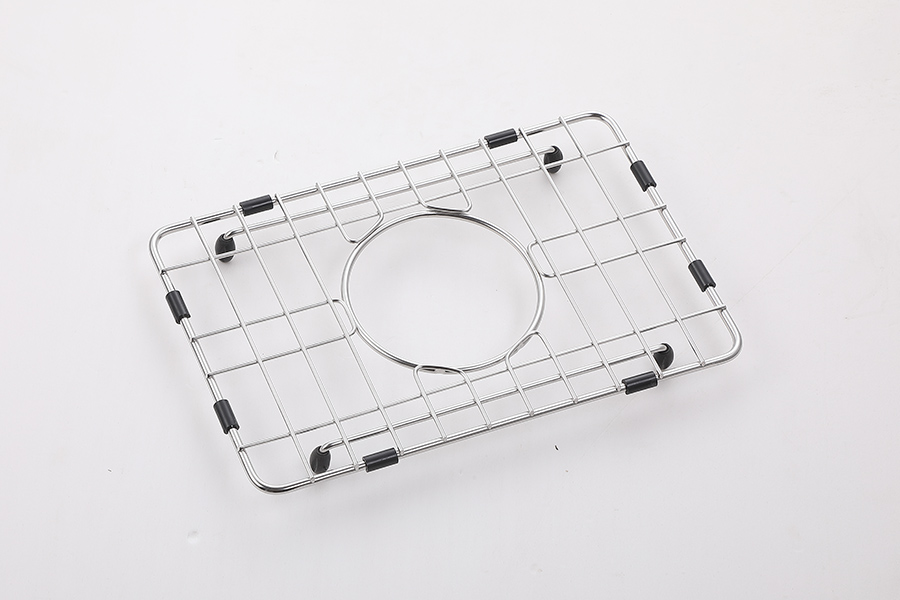
The most common reason people choose a sink bottom grid is to protect the sink finish. Stainless steel sinks are durable, but the bottom area receives constant friction from pots, pans, baking trays, and heavy utensils. Even careful use can leave micro-scratches over time, especially if cookware is slid rather than lifted. A bottom grid creates a raised platform so the cookware rests on the grid instead of the sink surface. This reduces direct abrasion and keeps the sink bottom looking newer for longer.
Protection is not only about scratches. When heavy cookware is dropped or set down quickly, the impact can leave dents or distort the sink bottom, especially in larger single-bowl sinks where the base spans a wider area. A well-designed grid distributes contact points and helps reduce the chance of concentrated impact marks. It also prevents sharp edges from baking sheets or metal tools from digging into the sink finish.
If you use cast iron or carbon steel cookware, a grid also helps reduce metal-to-metal contact that can leave rust-colored marks. These marks are often surface contamination rather than true sink corrosion, but they are still inconvenient and can make the sink look dirty even after cleaning.
A sink bottom grid lifts dishes and cookware slightly above the sink floor, allowing water to flow freely underneath. This changes how the sink behaves during use. Without a grid, a large plate or pan can seal against the sink bottom and trap water. Trapped water slows drainage, causes pooling, and increases the chance of mineral spots and soap film buildup. With a grid, water has open channels to move toward the drain, so the sink stays clearer during washing and rinsing.
Better drainage also improves hygiene in everyday terms. When water does not pool under items, there is less opportunity for residue to sit in warm moisture. This makes quick rinse-down cleaning easier because food particles and grease are less likely to cling to the sink bottom. Many users notice that sinks with a properly fitted grid require less scrubbing at the base and fewer deep clean cycles.
A grid can also help reduce noise. The sink bottom is a resonant surface, and metal cookware striking it creates loud impacts. The grid provides a buffer, lowering the noise level and making the sink more comfortable to use in open kitchens.
Beyond protection, a sink bottom grid improves how the sink works as a task zone. Many kitchens use the sink for multiple functions beyond washing. A grid can create a stable base that supports these tasks more safely.
For washing and rinsing, the grid helps keep items slightly elevated, which makes it easier to rinse soap away and prevents dishes from sitting in dirty water. For thawing, rinsing produce, or resting utensils, the grid can keep items above pooled water and reduce direct contact with the sink surface. Even when you are not using it intentionally, the grid tends to make the sink feel more structured and less like a flat basin where everything stacks on top of each other.
In high-use environments, a grid can also reduce maintenance time. When the sink bottom stays cleaner and less scratched, the sink maintains a more consistent appearance, which matters for kitchens that are frequently photographed, staged, or shown to clients.
A bottom grid only performs well when it fits the sink correctly. The best grid is not a universal size. It is designed around the sink’s internal bowl dimensions, drain location, and corner radius.
When selecting a grid, focus on these key factors:
Fit accuracy: measure internal bowl length and width, not the outer sink dimensions
Drain opening alignment: center drain and rear drain layouts require different cutouts
Corner shape: rounded corners need a grid that matches the sink radius for stable placement
Foot design: protective feet should lift the grid slightly and prevent metal-on-metal contact
Wire spacing: spacing should support cookware without allowing small items to tilt or fall through
Material and finish: corrosion-resistant construction and smooth welds improve longevity and cleaning ease
A well-fitted grid should sit stable without rocking. If it rocks, it can cause uneven wear and can trap debris under pressure points. If it sits too high, it can reduce usable bowl depth. If it sits too low without protective feet, it can scratch the sink or prevent water from flowing underneath.
The table below summarizes selection priorities and what they affect in daily use.
| Selection Point | Why It Matters | What Good Performance Looks Like |
|---|---|---|
| Bowl dimension match | Prevents shifting and wobble | Grid sits flat and stable |
| Drain cutout position | Ensures full drainage access | No interference with drain basket |
| Corner radius alignment | Improves contact stability | Grid follows sink contour closely |
| Protective feet | Reduces scratches and rattling | Feet lift grid evenly and stay secure |
| Wire spacing | Supports cookware and accessories | Pots sit level, small items do not tip |
| Weld quality and finish | Affects durability and cleaning | Smooth joints, no sharp edges |
For reference, ZHENGYONG provides fitted options designed for sink bowls and drain layouts in our Kitchen Sink Bottom Grid range.
A sink bottom grid is easy to maintain, but it should be cleaned regularly because it collects the same residues that collect in the sink. If you never lift it, food particles and soap film can build underneath and reduce the drainage benefits.
A practical routine is to lift the grid during deep cleaning or at least once a week, rinse it, and wipe the sink bottom. If your water is hard, mineral deposits can form on both the grid and the sink floor. A mild cleaning routine keeps the grid looking consistent and prevents dulling. After cleaning, ensure both the grid and sink are rinsed thoroughly to avoid leaving cleaner residue trapped beneath.
Check the grid feet periodically. If feet become loose or worn, the grid can start to sit unevenly, creating new scratch points. Replacing worn feet early helps protect the sink finish and keeps the grid stable.
If you prefer a consistently clean look, removing the grid temporarily during heavy food prep can reduce debris traps. After prep, rinse the sink, rinse the grid, and place it back. This takes little time and keeps the sink bottom clear.
A sink bottom grid is for protecting the sink surface, improving drainage, reducing noise, and making daily sink tasks more organized. It prevents cookware from directly scratching the sink bottom, keeps dishes elevated so water flows freely, and helps the sink stay cleaner with less effort. The best results come from choosing a grid that fits your bowl dimensions and drain layout accurately, then maintaining it with simple regular cleaning.
If you are not sure which grid size or drain cutout matches your sink, or you want guidance on selecting a bottom grid that suits your kitchen workflow, contact us anytime. ZHENGYONG provides product guidance and support for our Kitchen Sink Bottom Grid solutions, and we can help you choose the right specification for your needs.