Dish Drying Rack looks simple on the countertop, but a well-made rack is a balance of structure, drainage, corrosion resistance, and user habit. If the wire spacing is wrong, plates wobble and cups tip. If the joints are weak, the rack twists under load. If the coating or finish is inconsistent, rust starts at weld points and cut edges long before the rack reaches its expected service life. Understanding how a dish drying rack is made helps buyers evaluate quality beyond appearance and helps product teams define a rack that performs reliably in real kitchens.
This guide explains how a dish drying rack is manufactured from material selection to finishing and quality checks. It stays focused on real production logic and the design choices that create a durable dish drying rack for everyday use. You can also explore ZHENGYONG solutions on our dish drying rack collection.
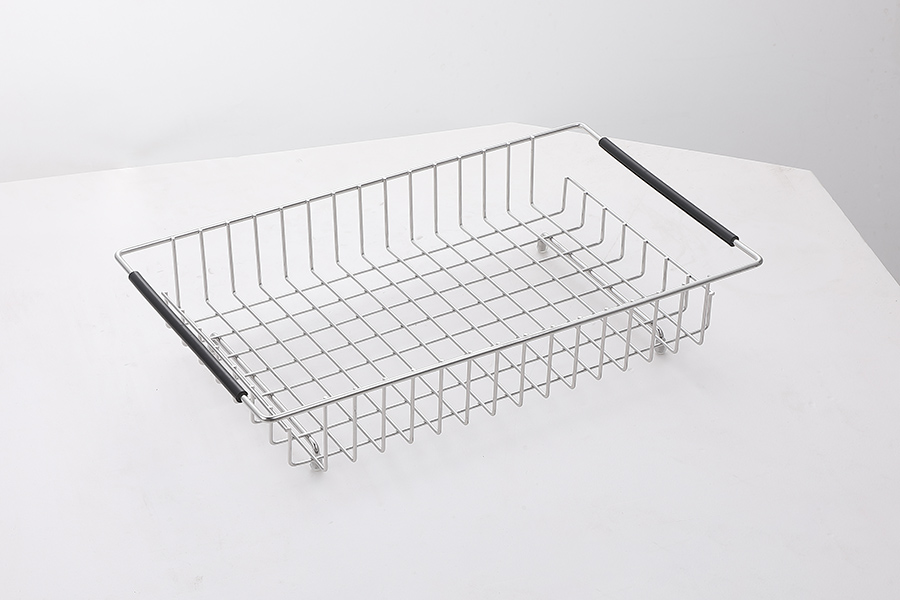
Manufacturing starts with a clear definition of how the rack will be used. A rack designed for a compact apartment sink needs different proportions than a family-size rack that holds multiple plates, bowls, and cookware. The target load is not only weight, but also shape distribution. Plates lean on tines, bowls sit in open bays, and pans rest on outer rails. Each contact point creates stress on wire joints and coating.
At this stage, manufacturers finalize the overall footprint, number of tiers, plate slot spacing, utensil cup position, and whether the rack includes a drainboard or integrated spout. A practical dish rack design also considers water flow direction so the countertop does not stay wet and so residue does not collect in corners.
Most metal dish drying racks rely on steel wire or stainless steel components. Steel wire is commonly chosen for structural strength and cost efficiency, then protected with plating or coating. Stainless steel variants are selected when long-term corrosion resistance is the priority, especially in humid regions or in kitchens with heavy daily use.
Material selection also includes plastics for feet, drainboards, and accessory cups. These parts must handle continuous contact with water, detergents, and sometimes high temperature dishware. When material selection is aligned with usage, the rack stays stable, resists wobble, and avoids premature cracking of plastic parts.
After material selection, wire is cut to length and formed into the rack’s primary geometry. This stage defines the accuracy of dimensions, which affects stability and user experience. Forming includes bending the outer frame, creating plate tines, and building secondary rails that support cups and cookware.
Consistency matters because even small deviations can cause rocking on the countertop or misalignment between the rack body and drainboard. This is why professional manufacturing uses controlled jigs and fixtures that keep angles, spacing, and symmetry stable across production.
Welding is one of the most important steps in making a dish drying rack because it determines structural strength. Spot welding or other joining methods connect wires at intersections and secure load-bearing rails. The goal is to create joints that do not crack under repeated loading, vibration, or minor impacts during daily use.
Weld quality is not only about strength. Excess weld spatter creates sharp points that can scratch dishes and weaken coating adhesion. Good welding practice produces clean joints with controlled heat input so the wire does not thin out at the joint, which would become a future failure point.
For multi-tier racks, reinforcement is especially important at vertical supports and corner joints because these areas carry most of the load and experience twisting forces when the rack is moved.
A rack’s finish will only be as good as the surface beneath it. Before coating or plating, manufacturers remove oil, dust, and oxidation from the metal. This preparation step improves adhesion and reduces the risk of peeling, bubbling, and early rust at joints.
Surface preparation typically includes degreasing, rinsing, and controlled drying. For some finishes, additional steps such as pickling or passivation may be used depending on metal type and required corrosion resistance. The purpose is to create a uniform surface so the protective layer bonds evenly across both open wire sections and weld points.
Protective finishing is what turns a wire frame into a kitchen-ready product. Common finish routes include chrome plating, powder coating, or other protective coatings designed to resist moisture exposure. Each finish has tradeoffs in appearance, feel, scratch resistance, and long-term corrosion behavior.
A durable finish must protect high-risk areas first. Weld points, cut wire ends, and underside contact zones are where moisture stays longer and where coatings are stressed during daily movement. If these areas are not covered evenly, rust will start there even if the rest of the rack looks perfect.
A well-made rack also avoids rough texture that traps water. Smooth finishes help water drain faster and make cleaning easier, which improves real-world longevity.
| Finish Type | Strength In Kitchen Use | What It Helps With | Typical Attention Point |
|---|---|---|---|
| Plated finish | Clean appearance, smooth touch | Easy wipe-down, consistent look | Needs strong base prep for adhesion |
| Powder coating | Strong moisture barrier | Better rust control in wet zones | Must protect weld points and edges |
| Stainless structure | Natural corrosion resistance | Long-term durability in humid use | Requires clean finishing to avoid tea staining |
This comparison is not about choosing one universal finish. It supports matching finish strategy to the user’s environment and cleaning habits.
After the rack body is finished, accessory parts are assembled. This may include utensil holders, cup racks, cutting board slots, or removable drainboards. Drainage components are not decorative. They influence countertop hygiene and user satisfaction.
A drainboard should guide water outward efficiently and prevent pooling under the rack feet. If the rack includes a spout, it must be positioned to direct water toward the sink without dripping off the sides. Feet must be stable and non-slip so the rack does not slide when loaded.
When manufacturers design this correctly, the rack feels practical in daily use because water management is controlled and the countertop stays drier.
Inspection is not only visual. A rack can look good and still fail early if weld strength is inconsistent or if coating thickness is uneven. Practical quality checks often include load testing, stability checks on a flat surface, and coating adhesion checks.
Many factories also check edge safety because cut wire ends can be sharp if finishing is not controlled. Dimensional checks confirm slot spacing and tier alignment so the rack performs as intended for plates and bowls.
A custom dish drying rack project for retail programs or kitchen sets typically adds more QC checkpoints, such as packaging drop tests and batch-to-batch dimensional control to keep replacement compatibility stable.
Dish drying racks are high-contact, wet-environment products. Small manufacturing differences show up quickly as rust, wobble, or peeling. Buyers who evaluate supplier capability often ask about welding consistency, coating control, surface preparation, and assembly standards because these steps predict long-term field performance more than the photo angle does.
ZHENGYONG specializes in kitchen and bathroom hardware manufacturing and focuses on controlled production steps that support stable quality, including structure consistency and finish reliability. You can review our rack styles and options on the dish drying rack collection. If you need a custom configuration for a specific retail plan, packaging requirement, or kitchen set integration, our team can provide guidance on structure selection and finish matching.
Making a dish drying rack involves more than shaping wire. The final performance depends on accurate forming, strong welding at load-bearing joints, thorough surface preparation, and protective finishing that covers weld points and edges. When drainage components and accessories are assembled with stability and water flow in mind, the rack becomes easier to use and less likely to rust or wobble in real kitchens.
If you are sourcing dish drying racks for a product line, retail program, or bulk order and want help selecting a practical structure and durable finish, contact ZHENGYONG. Share your target rack size, load requirements, and preferred finish style, and we can recommend suitable options and support your project with manufacturing guidance.