The most sanitary way to dry dishes is usually to let them air dry in a clean, well-ventilated area instead of wiping them with a reused towel. Air drying reduces direct contact after washing, which lowers the chance of reintroducing bacteria onto already cleaned dishes. In practical kitchen use, the best setup is one that lets water drain away quickly, keeps dishes elevated above the sink, and is easy to clean after daily use. That is where a kitchen sink roll up drying rack fits naturally into the discussion. It creates an open drying surface over the sink, helps water drip directly into the basin, and avoids the damp countertop conditions that often make drying areas less hygienic.
After dishes are washed properly, the next hygiene risk is what touches them before they are fully dry. A cloth towel may look clean, but if it has been used repeatedly, left damp, or stored poorly, it can transfer moisture, residue, and bacteria back onto dish surfaces. Air drying avoids that extra contact step. It is a simpler method, but in many kitchens it is also the cleaner one because clean dishes are left alone instead of being handled again.
This matters even more in busy homes and commercial kitchens. When staff or family members are drying dishes quickly, they often use the same towel again and again. Over time, that creates a hygiene weak point. A cleaner drying method is not only about washing. It is also about what happens after washing.
A sanitary drying setup needs three things. First, it should allow fast drainage so water does not collect around the dishes. Second, it should allow air circulation so moisture can evaporate instead of sitting on surfaces. Third, it should be easy to clean, because even a well-designed drying tool becomes less sanitary if it traps residue and is hard to maintain.
This is one reason over-sink drying solutions are often more practical than flat drying mats. A mat may absorb water, but it also stays damp longer and needs more frequent washing to stay clean. A raised rack structure improves airflow and lets water fall away from the dishes instead of pooling beneath them.
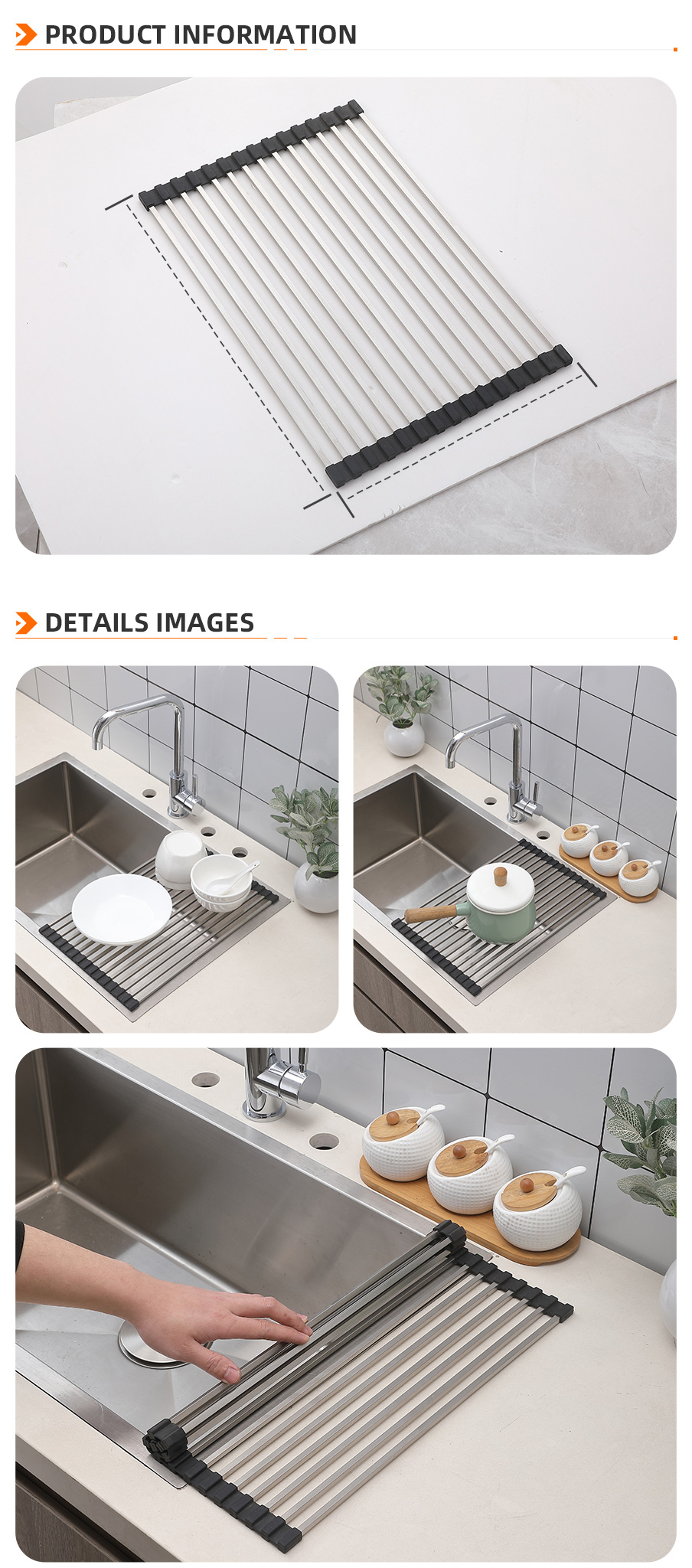
A kitchen sink roll up drying rack is useful because it turns the sink area itself into the drainage zone. Instead of collecting water on the countertop, it lets water drip directly into the sink through the spaces between the rods. The product here is designed exactly for that purpose, using multiple stainless steel rods connected with black or gray plastic parts in a rectangular roll-up structure. When in use, it lays flat across the sink. When not in use, it rolls up for storage, which helps keep the drying area less cluttered and easier to manage.
This product also emphasizes efficient water filtration, noting that the spacing between the stainless steel rods is designed so water can drain away quickly rather than collect under the dishes. That is directly relevant to sanitation because standing water is one of the main reasons drying areas start to feel less clean over time.
The material of the drying rack matters more than many buyers first expect. A drying product used every day needs to resist moisture, hold its shape, and stay easy to wipe down. This rack uses stainless steel as the main material and a polished finish, which helps in two ways. It improves resistance to rust and also creates a smoother surface that is easier to clean after exposure to water, detergent, and food residue. The product page also states that the polished surface is not easy to hold dirt and can be wiped clean more easily in daily use.
For B2B buyers, this is important because hygiene complaints often come from maintenance issues, not just from the original design. A rack that is hard to clean, easy to stain, or likely to corrode becomes a weak point in the kitchen over time. A stainless steel structure gives a more durable and more hygienic long-term base for repeated wet use.
From a sanitation point of view, drying over the sink solves several small problems at once. It keeps wet dishes away from direct countertop contact. It reduces puddles around the sink area. It makes drainage more direct. It also limits how much extra drying equipment sits on the counter collecting residue.
The roll-up design adds another practical advantage. Because the rack can be rolled and stored after use, the kitchen does not need to leave a permanent damp rack in place all day. That helps the area stay more open and easier to clean. The product is specifically described as being easy to unfold on the sink and easy to roll up afterward, which supports this kind of flexible daily use.
Some people still dry dishes with a towel because it feels faster. Others use a fabric drying mat because it looks neat on the counter. Both methods can work, but they require more attention to cleaning frequency. Towels must be changed often and fully dried between uses. Mats must be washed and dried thoroughly, or they can become damp holding surfaces instead of hygienic drying tools.
By comparison, an open rack structure tends to be easier to manage because it does not rely on absorbent material. Water drains away instead of being held near the dish surface. For kitchens that want a more sanitary and lower-maintenance drying method, that difference matters.
For importers, wholesalers, kitchenware distributors, and commercial buyers, the real question is not only what dries dishes. It is what dries dishes cleanly, efficiently, and repeatedly in real use. End users want a product that is easy to place, easy to clean, and compact enough for modern kitchens. Commercial buyers also care about material reliability, storage efficiency, and whether the product solves a visible daily-use problem.
This rack has several details that support that positioning. It uses stainless steel, offers dimensional tolerance of ±2 mm, is designed to lay flat across the sink, and supports brand customization. It also has a listed MOQ of 100 pieces and a supply ability of 20,000 pieces per month, which makes it more relevant for wholesale and project supply rather than only for one-off retail use.
If the goal is a more sanitary drying solution, buyers should pay attention to a few practical points. The rack should allow good drainage, use moisture-resistant materials, be easy to wipe clean, and avoid designs that trap food particles or standing water. It also helps if the rack can be stored away when not in use, because that keeps the sink area cleaner and reduces long-term clutter.
A kitchen sink Roll up Drying Rack works well in this context because it combines a simple open structure with quick drainage and compact storage. It is especially suitable for kitchens where counter space is limited and the drying tool needs to disappear easily after use. The product is also positioned for home kitchens and small catering stores, which shows it can be used in both residential and light commercial settings.
So, what is the most sanitary way to dry dishes? In most kitchens, it is air drying on a clean, elevated rack that drains directly into the sink rather than drying with a frequently reused towel. A setup that improves airflow, reduces standing water, and stays easy to clean will usually give a better hygiene result in daily use.
A kitchen sink roll up drying rack is a practical answer because it supports direct drainage, uses a stainless steel structure, and keeps the sink area easier to manage. If you are looking for a dish drying solution for your market and want to compare material, design, or customization options, feel free to contact us. We can help you find a more suitable drying rack solution based on your sales channel and application needs.
Previous: How To Store Stainless Steel Cutlery?
Next: What Drying Rack Dishes