Load capacity is one of the most important details when buyers choose dish drainer baskets for commercial kitchens, kitchenware distribution, retail channels, or project supply. A basket may look simple, but if the structure is weak, it can bend, shake, or deform after holding plates, bowls, cookware, and utensils for daily use.
For bulk orders, load capacity is not only about strength. It also affects user safety, product reviews, repeat orders, and after-sales cost. A well-made drying sink rack should stay stable under regular use, drain water smoothly, and keep kitchen items organized without losing shape.
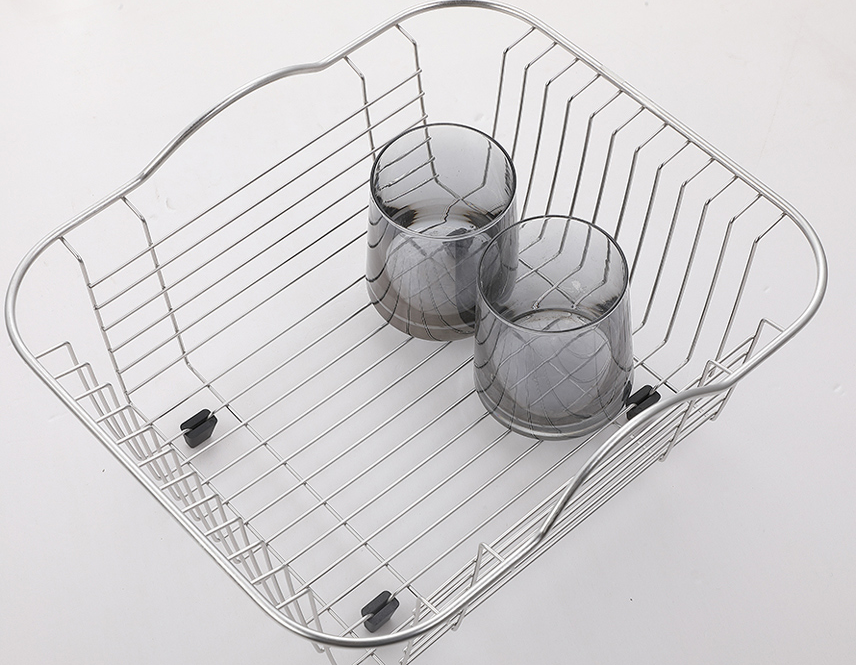
The first factor is wire strength. Thicker stainless steel wire usually gives better support, especially when the basket is used for heavy dishes or frequent kitchen washing tasks.
For buyers, the key is to balance strength and cost. Very thin wire may reduce price, but it can also reduce service life. In commercial kitchens, restaurants, hotels, and catering spaces, a stronger wire structure is often more suitable because the rack needs to handle repeated daily loading.
A reliable supplier should keep wire diameter consistent during production, not only in the sample.
Welding points decide whether the basket can hold weight evenly. Weak welding may break or loosen after repeated use, especially at corners, plate slots, and bottom support areas.
Good welding should be firm, smooth, and clean. It should support the frame without sharp edges or rough finishing. For wholesale buyers and OEM/ODM projects, welding consistency across batches is very important because small defects can create large quality problems after delivery.
The bottom of the basket carries most of the weight. If the base is not reinforced, the rack may sag when loaded with plates or cookware.
A strong bottom structure should spread weight across the full rack instead of concentrating pressure in one area. Cross wires, tighter spacing, and stable support points can help improve load capacity.
For dish drying use, the structure also needs enough open space for drainage. Strength and water flow should be considered together.
Plate slots are not only for organization. They also help distribute weight more evenly. If the spacing is too wide, plates may lean too much and create pressure on one side. If the spacing is too narrow, users may find it difficult to place larger plates.
A practical slot design should hold plates securely while keeping the basket easy to use. For different markets, buyers may request different slot spacing based on local dish sizes and kitchen habits.
This is where customization support becomes useful for distributors and kitchenware brands.
A dish drainer basket must stay stable when loaded. Foot position, height, and balance all affect safety and user experience.
If the feet are too weak or uneven, the rack may wobble. If the bottom does not sit flat, users may feel the product is unstable even if the wire is strong.
For sink or countertop use, protective feet can also reduce slipping and prevent scratches on the surface. This detail is especially important for buyers supplying hotel kitchens, restaurant kitchens, or premium kitchen accessory markets.
Not every buyer needs the same load capacity. A rack for home kitchen use may not need the same structure as one used in a restaurant washing station.
Before confirming an order, buyers should define the main application:
residential kitchen use
restaurant dishwashing station
hotel kitchen operation
catering preparation area
kitchen accessory retail supply
wholesale kitchenware distribution
Once the application is clear, the supplier can adjust wire thickness, rack size, plate slot layout, and packaging requirements more accurately.
For bulk orders, buyers should not only check the first sample. Load capacity should remain stable across production batches.
Useful checks include frame balance, welding strength, wire thickness, surface finishing, and carton protection. If the rack is bent during shipping, it may lose stability before reaching the customer.
Export packaging should protect the basket from pressure, scratches, and deformation. This is important for overseas buyers who need stable quality after long-distance transportation.
Improving the load capacity of dish drainer baskets depends on stainless steel wire strength, welding quality, bottom reinforcement, plate slot design, foot stability, and consistent production control.
For buyers sourcing dish racks for commercial kitchens, wholesale supply, retail channels, or OEM/ODM projects, a stronger structure can reduce complaints and improve long-term product value.
Share your target market, rack size, loading needs, quantity, and packaging requirements with us. We can help recommend suitable structure options and support your sourcing plan with practical production guidance.