A sink grid may look simple, but if the drain position is not aligned correctly, it quickly becomes inconvenient to use. For kitchen sink manufacturers, distributors, and bulk buyers, this is one of the most common issues that leads to customer complaints.
A well-designed grid should protect the sink, support daily use, and allow easy access to the drain without needing to remove the grid. Our custom stainless steel sink grid solutions are developed to match different sink models, helping buyers avoid fitting problems and improve overall product usability.
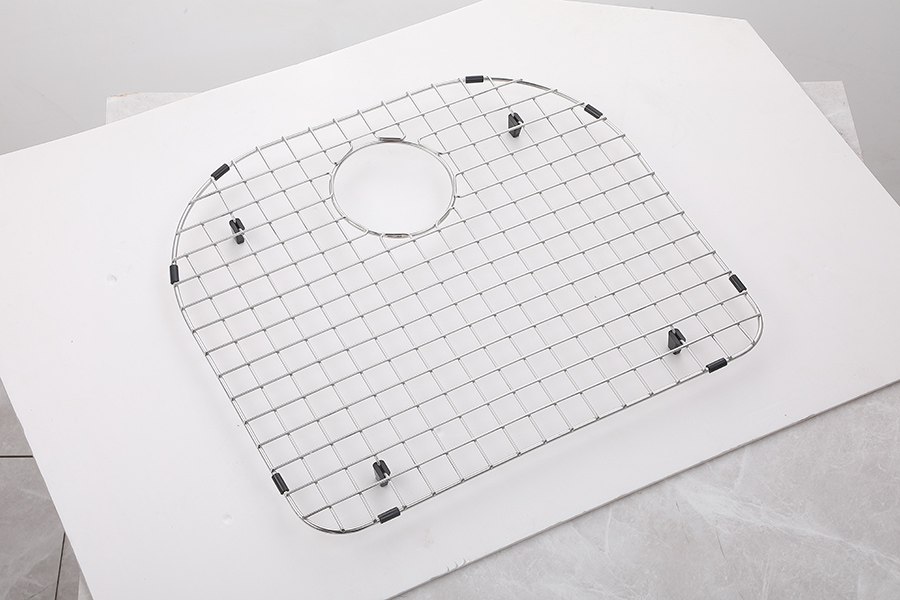
Before customization begins, it is important to understand the type of sink drain layout. Not all sinks use a centered drain. Some are placed at the rear, others are offset to one side, and some have special shapes for design purposes.
Each layout requires a different cutout position in the grid. If the drain opening is misplaced, it can block water flow or make cleaning difficult. For bulk buyers, this small mismatch can affect the entire batch of products.
When designing a sink wire rack, the drain opening should be planned based on actual sink usage, not just general dimensions.
Perfect fitting always starts with accurate measurement. Buyers should confirm the internal bottom size of the sink, including length, width, corner radius, and slope.
The grid should sit slightly above the sink bottom, leaving enough space for water to flow. At the same time, it should not be too loose, otherwise it may shift during use.
For OEM or ODM projects, it is better to work with detailed drawings or physical samples. This helps ensure the grid matches the sink structure before mass production begins.
The drain cutout should not only match the position, but also consider how users interact with the sink. If the opening is too small, it may block cleaning tools. If it is too large, it may reduce support for items placed on the grid.
In commercial kitchens and high-use environments, staff need quick access to the drain area. A well-designed opening allows easy removal of waste without lifting the entire grid.
This detail becomes especially important for projects such as restaurant kitchens, hotel kitchens, and apartment installations where efficiency matters.
Adding a drain cutout can weaken the structure if not designed carefully. The surrounding wire layout must maintain enough strength to support cookware, dishes, and utensils.
A good design keeps the grid stable even with a central opening. Reinforced wire spacing and proper welding around the drain area help prevent deformation over time.
For buyers sourcing in bulk, this is an important point to check during sample evaluation.
Protective feet are used to keep the grid slightly raised above the sink surface. Their position and height also affect how the drain opening works.
If the grid sits too low, water flow may be restricted. If it sits too high, it may feel unstable. The correct height ensures smooth drainage while protecting the sink surface from scratches.
Rubber or plastic feet also help reduce noise and prevent movement during use, which improves the overall experience for end users.
Before placing a large order, buyers should always confirm a sample. This is the most direct way to check whether the grid fits properly with the drain position.
During sample testing, it is useful to review:
whether the grid sits flat inside the sink
whether the drain opening aligns correctly
whether water flows smoothly through the opening
whether cookware can be placed without instability
whether the structure remains strong around the cutout
Once the sample is confirmed, the same specification should be maintained for all bulk production.
Even a well-designed grid can be affected by poor packaging. During transportation, wire products may bend slightly, which can affect fitting accuracy.
Strong packaging helps maintain shape and protects the drain cutout area. For bulk buyers, consistency across all units is just as important as the first sample.
Stable production and careful packaging ensure that every piece fits the sink correctly after delivery.
Ensuring a sink grid fits perfectly with the drain position requires attention to measurement, drain layout, structural design, and production accuracy. A well-matched grid improves drainage efficiency, protects the sink surface, and enhances daily usability.
For wholesalers, sink manufacturers, and project buyers, getting this detail right helps reduce complaints and improves product value.
If you are working on Custom Sink Grid projects and need support with sizing, drain alignment, or bulk production planning, feel free to share your drawings and requirements. We can help review your design and provide a suitable solution for your market and application needs.