A dishwasher handles detergent, grease, food particles, minerals, and moisture during every cycle. Although it washes dishes automatically, residue can still collect around the filter, spray arms, door seals, detergent dispenser, and drain area.
Regular cleaning can reduce odors and help water circulate more effectively. Because dishwasher structures vary, always check the appliance manual before removing internal parts.
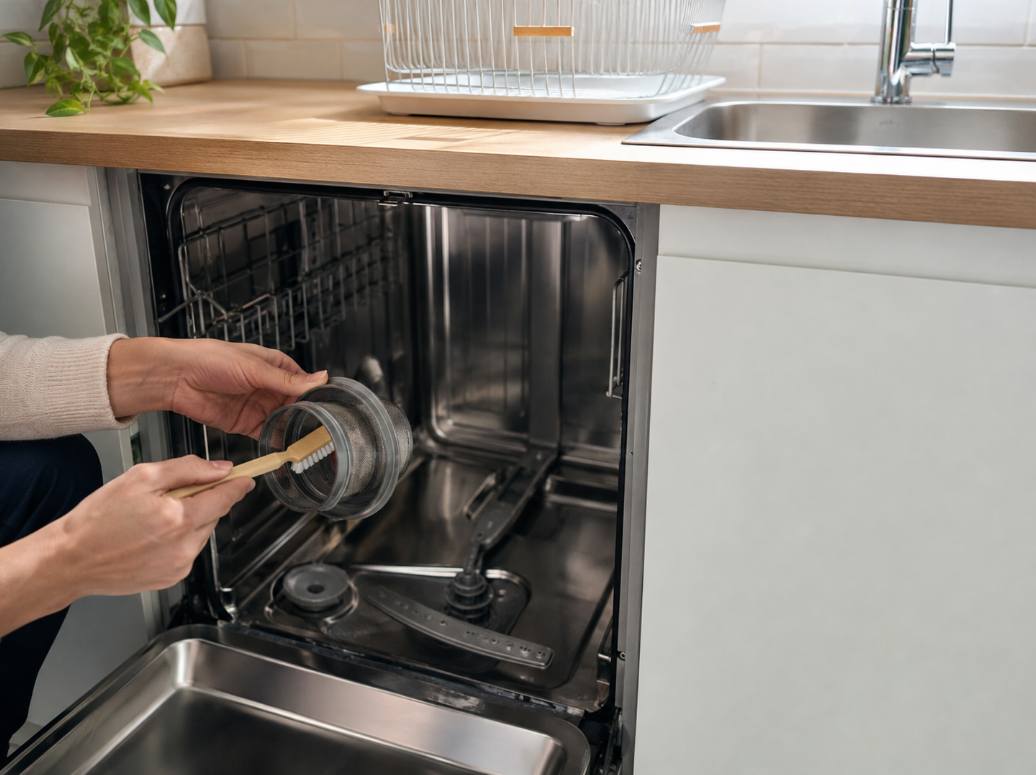
Begin with an empty dishwasher. Remove all plates, utensils, detergent tablets, and loose items from the racks.
Switch off the appliance before reaching into the filter or drain area, especially when broken glass or sharp fragments may be present.
Pull out the lower rack and inspect the bottom of the machine.
Remove food particles, labels, small bones, pieces of plastic, and other visible debris. Avoid pushing waste deeper into the drain opening.
Some filters twist out, while others contain several connected sections.
Do not force a component that does not release easily. Follow the manufacturer’s instructions for removal and reinstallation.
The filter collects food particles and prevents them from circulating through the machine.
A heavily blocked filter may contribute to odors, gritty residue, standing water, or poor washing results.
Remove the filter and rinse it under warm running water.
Use a soft brush and a small amount of mild dishwashing liquid to loosen grease and trapped food. Avoid wire brushes or abrasive pads that may damage the filter mesh.
Clean the area beneath and around the filter with a damp cloth.
Check carefully for glass, ceramic fragments, or sharp food packaging before placing your fingers near the opening. Reinstall the filter securely after cleaning.
The spray arms distribute water around the dishwasher. Blocked openings can prevent water from reaching dishes evenly.
Rotate each spray arm by hand and confirm that it moves freely.
Inspect the small openings for seeds, mineral deposits, or food particles. When the appliance instructions allow removal, rinse the spray arm and clear visible blockages with a non-damaging tool.
Large trays, pans, handles, and utensils should not block the spray arms.
Before starting a cycle, rotate the arms manually to confirm that they can move without touching the load.
The edges of the dishwasher door may not receive the same water flow as the main interior.
Use a soft cloth with warm water and a suitable mild cleaner to wipe the door edges, detergent dispenser, hinges, and rubber seals.
Do not pull, stretch, or scrub the seal aggressively.
A damaged seal may allow water to leak during operation. Cracks, deformation, or persistent leakage should be inspected by a qualified technician.
After reinstalling the removable components, run an empty cycle with a dishwasher cleaner approved for the appliance.
Do not mix bleach, vinegar, ammonia, acids, or different cleaning products. Incompatible chemicals may produce harmful fumes or damage stainless steel, rubber, and internal components.
When the cleaning cycle finishes, leave the door slightly open so moisture can escape.
If water remains at the bottom of the appliance, check the filter and drain area again. Persistent standing water may indicate a blockage or service issue.
Plastic containers, cups, and recessed items may remain damp after washing.
A Kitchen Sink Dish Drying Rack provides a ventilated space where these items can finish drying without filling the sink basin or leaving water across the countertop.
A useful drying rack should provide:
Stable support for dishes and cups
Open spacing for airflow
Efficient drainage
Suitable stainless steel construction
Enough room for the expected daily load
The rack dimensions should match the sink, countertop, and available kitchen space.
We manufacture sink grids, dish-drying racks, drain baskets, roll-up racks, Cup Washers, and bathroom storage accessories.
Our production system combines product development, design, manufacturing, and sales. Different dimensions, structures, stainless steel grades, finishes, and packaging methods can be developed for distributors, retailers, sink manufacturers, and project buyers.
Developing kitchen accessories or matching hardware for sink products?
Send us the required dimensions, stainless steel grade, rack structure, surface finish, packaging method, and order quantity. We will prepare a suitable Kitchen Sink Dish Drying Rack proposal.